Mastering Size Scans in Real Estate: A Strategic Tool for Professionals
In the fast-paced world of real estate, precision matters. Whether you’re assessing potential investments or optimizing existing properties, accurate data is non-negotiable. Enter “size scan”, a technique transforming how professionals evaluate spatial dimensions. From land parcels to commercial buildings, this method offers clarity amid complexity.
For real estate agents, developers, and investors alike, mastering size scans unlocks competitive advantages. It enables informed decisions backed by reliable metrics rather than assumptions. Understanding its nuances becomes critical in today’s dynamic market landscape.
The Fundamentals of Size Scanning
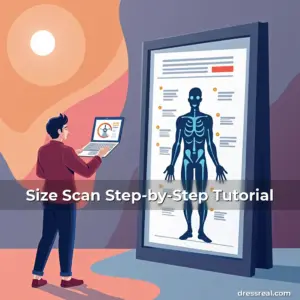
A size scan refers to systematically measuring and analyzing physical spaces using advanced technologies. Unlike traditional manual methods, modern approaches leverage drones, LiDAR sensors, and satellite imagery for accuracy. These innovations reduce human error while accelerating project timelines significantly.
This process goes beyond mere square footage calculations. It encompasses volume assessments, floor plan analysis, and even structural evaluations indirectly. Such comprehensive data empowers stakeholders to visualize properties holistically before committing resources.
- Accuracy: Advanced systems minimize measurement discrepancies common with conventional tape measures or estimations.
- Efficiency: Automation allows rapid coverage across expansive areas without compromising quality.
- Data Integration: Results often sync seamlessly with CAD software, BIM platforms, and CRM databases for streamlined workflows.
Why Size Scans Matter in Modern Real Estate
Real estate markets thrive on precise valuation models. Inaccurate space measurements lead to financial miscalculations affecting both buyers and sellers. Size scans address this gap by providing verifiable evidence for negotiations and appraisals alike.
Consider a high-stakes commercial lease agreement. Discrepancies in measured versus advertised square feet could cost thousands in rent adjustments annually. With size scans, such risks diminish considerably, ensuring fairer transactions overall.
Moreover, regulatory compliance demands exactness. Zoning laws, building codes, and tax assessments rely heavily on official measurements. Proactive use of scanning technology preemptively identifies issues before they escalate during inspections or audits.
Tools & Technologies Driving Effective Size Scans
The evolution of remote sensing has revolutionized size scanning capabilities. Drones equipped with photogrammetry cameras now capture aerial views with millimeter-level precision. These devices operate efficiently across diverse terrains from urban skylines to rural landscapes.
Laser-based LiDAR systems offer another dimension of insight. By emitting laser pulses that reflect off surfaces, they map three-dimensional structures accurately. This proves invaluable for heritage sites requiring preservation efforts alongside contemporary developments.
Satellite imaging complements ground-level surveys by monitoring large tracts continuously. Changes in land use patterns become visible over time, aiding long-term strategic planning initiatives among investors focused on sustainable growth.
Differentiating Between Available Options
Selecting appropriate tools depends largely on application specifics. Drone-mounted sensors excel at capturing exterior features quickly whereas indoor environments benefit more from handheld scanners designed for confined settings. Each option caters uniquely to particular operational needs.
Cost considerations also play a role. Entry-level solutions may suffice for basic requirements while enterprise-grade packages provide extensive analytics suitable for complex projects involving hundreds of units simultaneously.
Implementing Size Scans Across Property Types
Residential properties present distinct challenges compared to commercial counterparts. Single-family homes require meticulous attention to architectural intricacies like sloped ceilings or irregular layouts. Customized scan protocols adapt accordingly, preserving dimensional integrity despite varied design elements.
Conversely, multifamily complexes demand scalability. Bulk processing techniques allow simultaneous assessment of entire apartment blocks reducing labor intensity substantially. Automated reporting functions then consolidate findings uniformly across multiple units.
Industrial facilities pose additional complexities due to vast open spaces interspersed with machinery installations. Here, integrating motion detection algorithms ensures moving objects don’t skew readings inadvertently during active operations periods.
Cases Studies Demonstrating Impactful Applications
An Australian development firm utilized drone-assisted scanning prior to constructing a mixed-use housing project. The resulting dataset revealed previously undetected terrain variations impacting foundation designs. Adjustments saved millions in retrofitting costs later stages.
In another example, U.S.-based mall operators conducted regular volumetric analyses post-renovation phases. Continuous tracking enabled them to optimize tenant allocations dynamically based on actual usable space instead of static blueprints alone.
Historic preservationists applied LiDAR mapping extensively when restoring colonial-era estates abroad. Detailed digital replicas facilitated authentic reconstruction efforts maintaining original character without risking damage through intrusive methods.
Common Pitfalls & How To Avoid Them
Despite technological advancements, implementation hurdles persist. Poorly calibrated equipment leads to erroneous results undermining credibility. Regular maintenance schedules combined with periodic recalibrations mitigate such risks effectively.
Data interpretation errors represent another frequent misstep. Training personnel adequately on software interfaces prevents misunderstandings regarding generated outputs which might otherwise influence poor business choices negatively.
Last but certainly not least, security concerns surrounding sensitive location data cannot be overlooked. Implementing robust encryption standards protects against unauthorized access potentially exposing proprietary information vulnerable exploitation.
Future Trends Shaping Size Scan Innovations
Artificial intelligence integration promises further refinements in automated feature recognition capacities. Machine learning models trained on extensive datasets enhance predictive modeling abilities, foreseeing probable maintenance needs ahead of scheduled checks.
Blockchain technology introduces novel avenues for secure record keeping. Immutability characteristics inherent blockchain architectures guarantee tamper-proof documentation accessible transparently across authorized parties regardless geographical dispersion factors.
Augmented reality overlays could soon transform virtual property tours entirely. Potential buyers experience immersive walkthroughs pre-purchase enabling better decision-making grounded concrete visualizations rather abstract descriptions only.
Maximizing ROI Through Strategic Application Of Size Scans
Investors seeking maximizing returns prioritize assets possessing clear spatial definitions facilitating efficient utilization rates. Properties lacking definitive boundary delineations risk depreciation values due ambiguity concerning true available area figures.
Land acquisition ventures particularly benefit from thorough preliminary scans identifying encroachments easements or legal disputes early onset preventing costly litigation aftermaths typically associated unresolved territorial conflicts.
Rent optimization strategies gain traction when landlords align rental pricing strictly according actual occupied square meters instead estimated estimates prone overvaluation tendencies prevalent unverified sources.
Conclusion
Mastery of size scanning techniques equips real estate professionals with unparalleled analytical prowess navigating increasingly sophisticated markets. As technology continues evolving rapidly, staying abreast latest methodologies remains imperative sustaining edge competition sector.
By embracing innovative tools strategically aligned individual objectives, practitioners unlock untapped opportunities enhancing profitability longevity careers alike. Ultimately success hinges continuous adaptation leveraging cutting-edge solutions empower informed choices consistently.

news is a contributor at DressReal.com. We are committed to providing well-researched, accurate, and valuable content to our readers.