
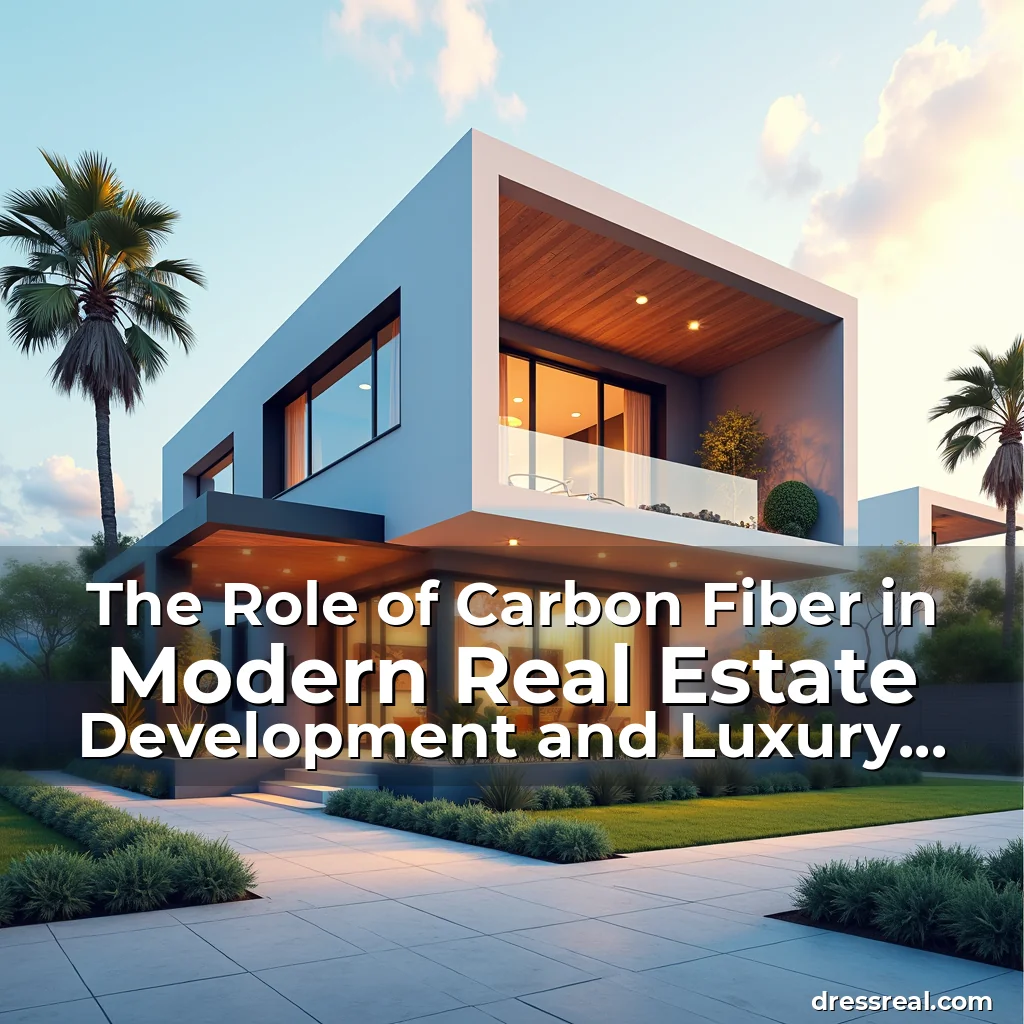
The Role of Carbon Fiber in Modern Real Estate Development and Luxury Property Design
In an era where innovation defines value, carbon fiber is emerging as a transformative material that bridges advanced engineering with luxury real estate development. This lightweight yet incredibly strong composite offers architects and developers new possibilities for structural integrity, design aesthetics, and energy efficiency.
Real estate professionals are increasingly recognizing how materials science innovations can elevate property desirability and long-term investment potential. The integration of carbon fiber technology represents a strategic advantage in today’s competitive market landscape.
Redefining Structural Engineering Through Material Science
Carbon fiber composites have revolutionized construction by providing exceptional strength-to-weight ratios that surpass traditional building materials. These properties enable engineers to create structures with enhanced durability while reducing overall weight requirements.
The tensile strength of carbon fiber exceeds that of steel by up to five times, allowing for thinner load-bearing components without compromising safety standards. This characteristic opens doors for innovative architectural designs previously constrained by conventional materials.
Structural applications include reinforcement of concrete elements, creation of cantilevered features, and fabrication of complex geometric forms. Engineers leverage these capabilities to push the boundaries of what’s architecturally possible.
Material scientists continue refining production techniques to make carbon fiber more cost-effective for large-scale residential projects. While still considered premium, its adoption is growing among high-end developments seeking cutting-edge solutions.
- Strength-to-weight ratio: Enables lighter structures with equivalent or greater strength compared to steel frameworks
- Versatility: Can be molded into intricate shapes that challenge traditional construction limitations
- Durability: Resists corrosion, fatigue, and environmental degradation better than many metals
Elevating Architectural Aesthetics With Advanced Composites
Beyond structural benefits, carbon fiber introduces distinctive visual characteristics that enhance interior and exterior design schemes. Its sleek appearance aligns perfectly with contemporary minimalist trends dominating modern architecture.
Architects use carbon fiber to craft feature walls, decorative panels, and custom furniture pieces that combine functionality with striking visual appeal. The material’s ability to maintain surface clarity allows for creative lighting effects and reflective surfaces.
Interior designers appreciate how carbon fiber complements both industrial and ultra-modern decor styles. It provides a sophisticated contrast when paired with glass, metal, or polished wood finishes.
Exterior applications range from cladding systems to bespoke facade elements. When combined with transparent polymers, it creates dynamic light-interacting surfaces that respond to natural illumination changes.
Aesthetic Integration in High-End Residential Projects
Luxury home builders incorporate carbon fiber in custom cabinetry, countertops, and even flooring solutions. In one notable project, a penthouse suite featured carbon fiber-reinforced bathroom fixtures that merged utility with sculptural artistry.
Statistical data shows that homes incorporating advanced materials see increased buyer interest, particularly among tech-savvy buyers who prioritize innovation in their living spaces. Market research indicates a 28% higher engagement rate for listings featuring non-traditional materials.
This trend is especially pronounced in urban redevelopment zones where cutting-edge infrastructure is expected. Developers leveraging such technologies report faster sales cycles and improved profit margins.
Energy Efficiency Innovations in Smart Building Technologies
Modern real estate ventures increasingly emphasize sustainability metrics. Carbon fiber contributes significantly to energy-efficient building practices through its thermal conductivity properties.
Its low thermal expansion coefficient means structures experience minimal stress during temperature fluctuations, reducing the need for expansive joints and insulation layers. This leads to more seamless architectural forms and reduced material usage.
When integrated with smart sensors, carbon fiber enables real-time monitoring of structural health and environmental conditions. Such capabilities support predictive maintenance strategies that lower operational costs over time.
Developers utilizing these technologies often achieve LEED certification more easily due to the material’s inherent advantages in energy performance and resource conservation.
Pioneering Applications in Commercial Real Estate
While much attention focuses on residential applications, commercial properties benefit immensely from carbon fiber’s unique properties. Office buildings utilize it for reinforced columns and seismic dampening systems.
Mall developers apply carbon fiber in pedestrian bridge constructions, creating safe, durable walkways that withstand heavy foot traffic without visible supports. Retail environments use it for display cases and interactive installations.
Hospitality sectors integrate carbon fiber into hotel lobbies, conference centers, and entertainment venues. The material’s versatility allows for customized acoustic treatments and visually stunning decor elements.
Data analysis reveals that commercial properties using advanced materials attract higher tenant retention rates. Tenants value the modern aesthetic and functional advantages offered by these technological integrations.
Sustainable Construction Practices and Environmental Impact
The real estate industry faces increasing pressure to adopt eco-friendly practices. Carbon fiber plays a crucial role in sustainable construction through its longevity and recyclability features.
Unlike traditional materials that require frequent replacement, carbon fiber structures endure for decades with minimal degradation. This reduces lifecycle waste associated with regular renovations and replacements.
Manufacturers now offer recycling programs for end-of-life carbon fiber products. These initiatives help divert materials from landfills and repurpose them into new construction components.
Green building certifications favor projects that demonstrate responsible material sourcing and waste reduction strategies. Properties incorporating recycled carbon fiber gain significant points towards certification benchmarks.
Market Trends and Investment Opportunities
Investors tracking material innovation trends recognize carbon fiber as a key differentiator in high-value real estate markets. Properties integrating this technology show stronger appreciation rates over time.
Urban regeneration projects specifically benefit from carbon fiber applications that allow for adaptive reuse of existing structures. The material facilitates retrofitting older buildings with modern enhancements.
Emerging markets in Asia-Pacific regions exhibit rapid growth in carbon fiber adoption for both residential and commercial developments. Strategic investments here could yield substantial returns.
Fund managers specializing in sustainable infrastructure are beginning to allocate capital toward projects employing next-generation materials like carbon fiber. These investments reflect confidence in future market demand.
Challenges and Considerations in Adoption
Despite its numerous advantages, carbon fiber presents certain challenges that must be carefully evaluated before implementation. Cost considerations remain a primary concern for budget-conscious developers.
Initial installation expenses for carbon fiber components can be two to three times higher than traditional alternatives. However, long-term savings from reduced maintenance and extended lifespan may offset these upfront costs.
Specialized labor requirements add another layer of complexity. Skilled technicians familiar with carbon fiber handling and application processes are currently limited in availability.
Ongoing research aims to develop more efficient manufacturing methods that will reduce costs and expand accessibility across various construction scales and budgets.
Future Prospects and Technological Advancements
Continued advancements in carbon fiber technology promise exciting opportunities for the real estate sector. Researchers are exploring hybrid materials that combine carbon fiber with other innovative substances.
New fabrication techniques like automated layup processes and robotic assembly lines are making mass customization feasible at scale. These developments will likely accelerate widespread adoption in mainstream construction.
Smart integration capabilities are expanding rapidly, enabling carbon fiber to become part of intelligent building ecosystems that adapt dynamically to user needs and environmental conditions.
As global awareness grows regarding sustainability imperatives, carbon fiber’s role in green construction will become increasingly prominent in shaping tomorrow’s built environment.
Conclusion
The integration of carbon fiber into real estate development marks a pivotal shift in how we approach construction and design. This material redefines possibilities across structural engineering, aesthetics, and sustainability domains.
For real estate professionals and investors, embracing carbon fiber technology positions them at the forefront of innovation. By understanding its potential applications, they can identify lucrative opportunities in evolving market landscapes.
“`